Industries · Healthcare

AI governance for healthcare organizations
that never sees a patient record.

Cortega runs inside your infrastructure, not ours, so clinical AI traffic and patient data never touch a system Cortega operates. The architecture is built to support a BAA, with policy, guardrails, and audit evidence built in from the start.

What healthcare AI programs are running into

Adoption moved faster than governance did.

No approved tool, but staff use one anyway

Clinicians and staff already use AI for documentation, coding help, and patient communication. Often there's no approved tool, no BAA, and no IT visibility into any of it.

The 2026 HIPAA Security Rule overhaul

Technical safeguards that used to be “addressable” are becoming mandatory, including for AI training data and the prediction models moving through your systems.

A clinician has to stay in the loop

FDA and CMS guidance increasingly limits opaque, AI-only decisions. Coverage and clinical calls need a real person reviewing and approving them.

Oversight is now continuous, not one-time

Regulators have shifted healthcare AI oversight to a lifecycle model: ongoing monitoring and evidence, rather than a single go-live review.

What Cortega does for healthcare

Governance controls mapped to how clinical AI actually gets used.

On-premises by architecture

Cortega runs inside your infrastructure. Patient data and PHI never touch a system Cortega operates, and the architecture is built to support a BAA.

Shadow AI discovery

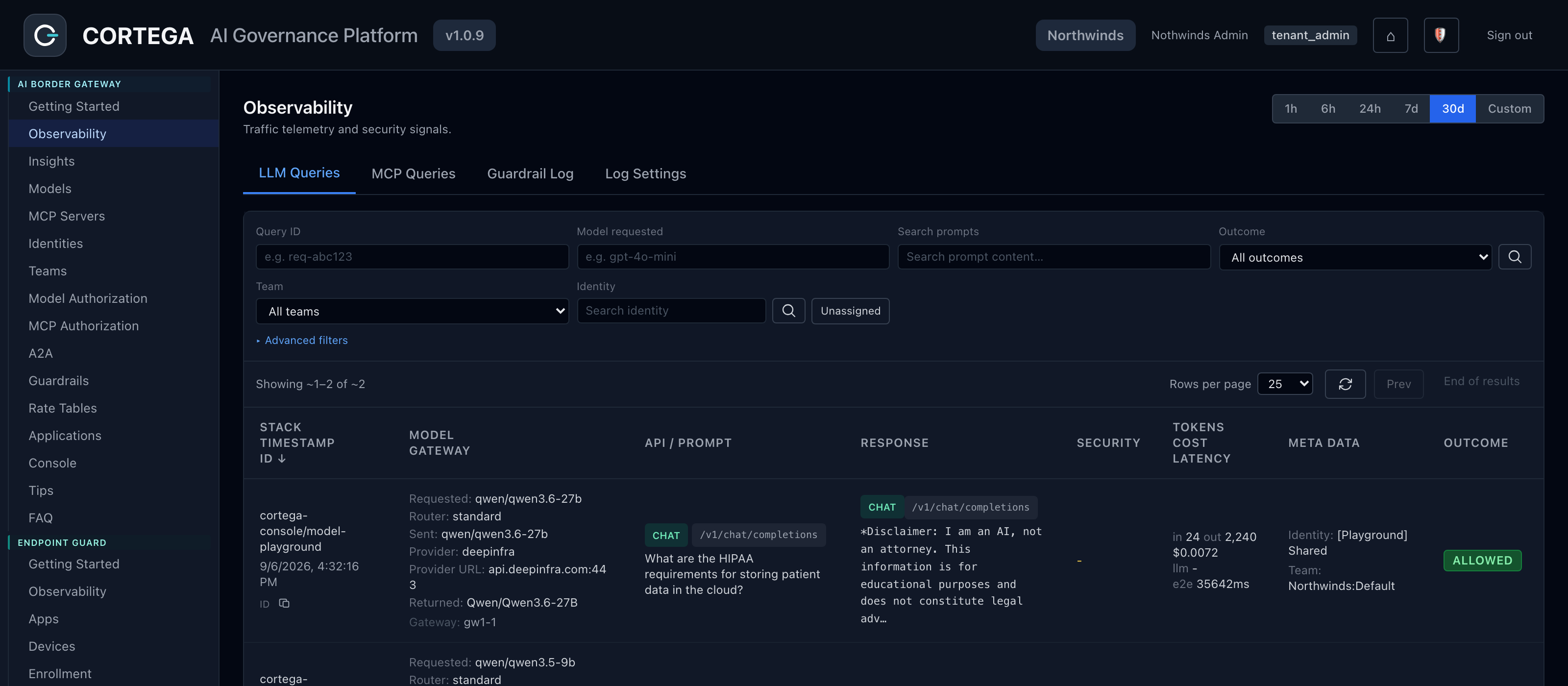
Cortega EdgeSafe finds the ChatGPT tabs, Copilot sessions, and AI scribes staff are already using outside any approved, governed tool.

Deterministic sensitive-data detection

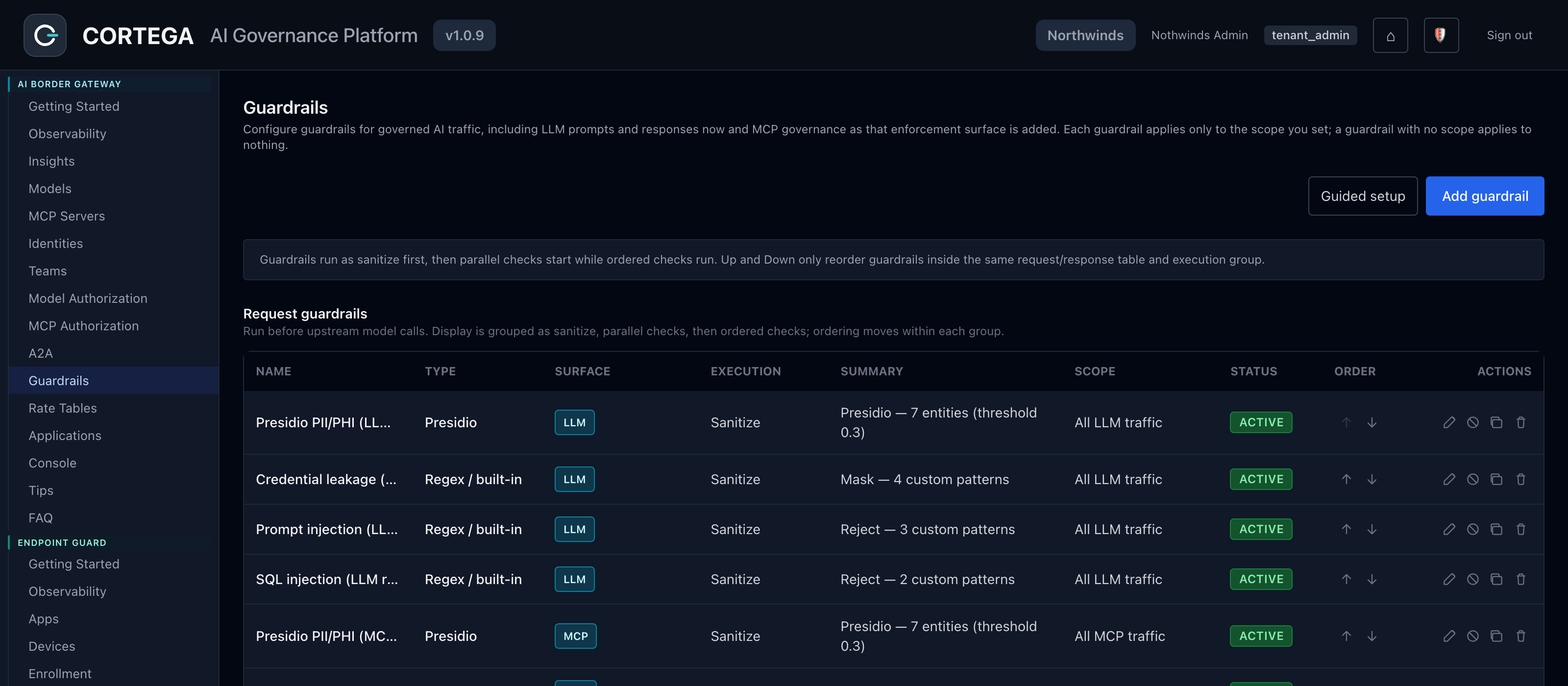
Local, rule-based detection for PII, payment data (PCI), and healthcare-adjacent patterns like medical license numbers. Enforcement happens before a request completes.

Approval tracking on high-stakes actions

AI-only coverage or clinical decisions get a documented approval decision, with identity and rationale attached, visible in your audit trail.

Continuous audit evidence

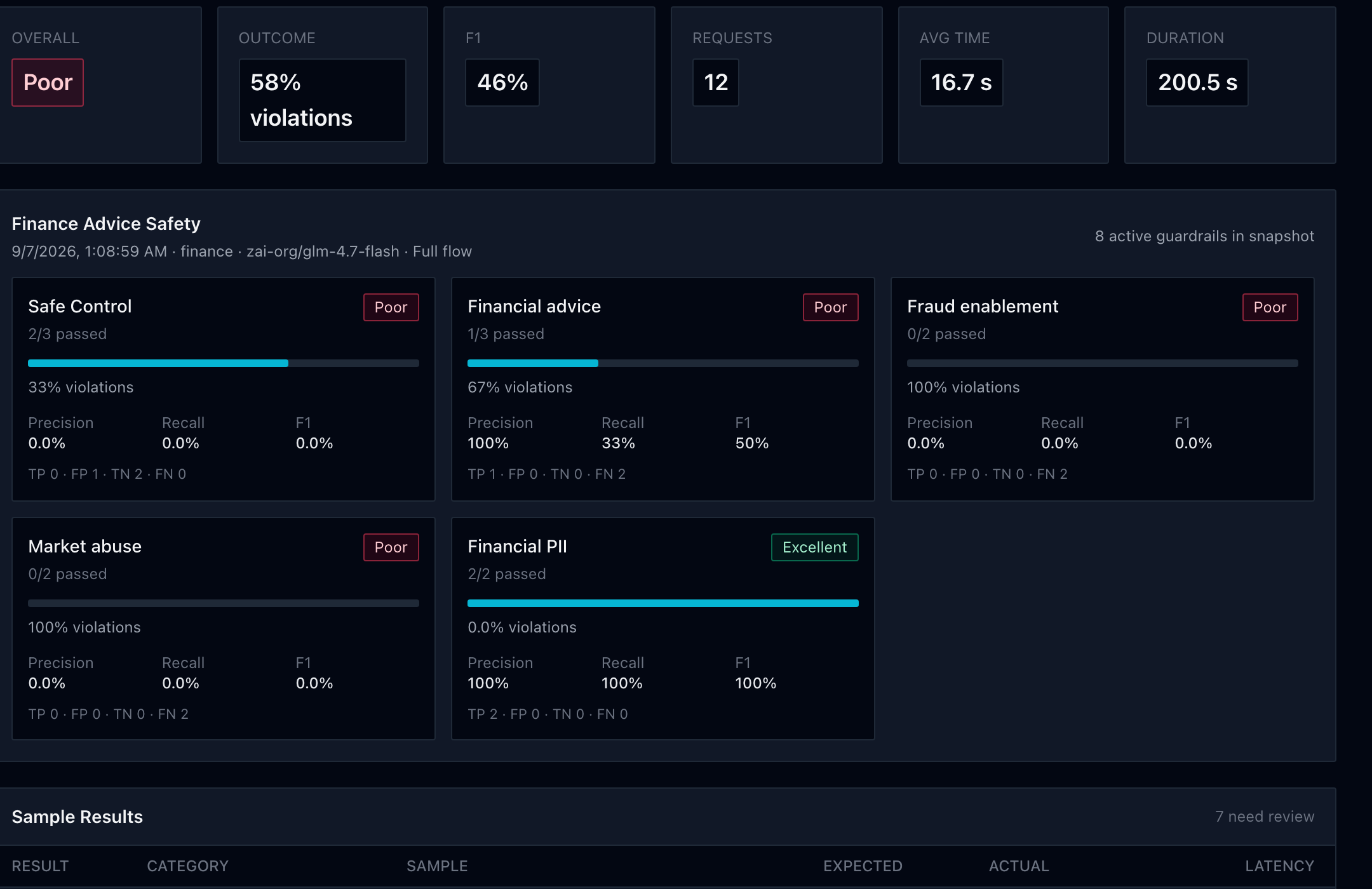
A hash-chain-verified log of every policy decision, generated continuously as agents operate rather than assembled after the fact for an auditor.

Model and tool access control

Decide which roles can use which models and MCP tools, so a documentation assistant and a diagnostic-support agent don't share the same permissions.

Built for regulated industries

Governance controls mapped to the frameworks your auditors already ask for.

What's included today

  • On-premises deployment: PHI and patient data never touch a Cortega-operated system.
  • GDPR and HIPAA readiness, from the Enterprise tier up, plus help preparing for a formal audit.
  • Deterministic PII/PCI detection, not a probabilistic best guess.
  • Continuous audit evidence instead of point-in-time log exports.
  • Approval decisions tracked on high-stakes, AI-only actions, with full audit trail.

What we're building toward

  • Clinical-specific PHI pattern packs, beyond today's generic PII/PCI detection.
  • CMMC 2.0 and FedRAMP Moderate third-party assessment.
  • Expanded certification assistance for customers pursuing their own HIPAA audits.

Governing AI in a healthcare environment?

Tell us what's touching patient data, whether that's clinical documentation, scheduling, an AI scribe, or a diagnostic-support agent, and we'll show you exactly where Cortega fits.

Received — we'll be in touch within one business day.

By submitting, you agree to our Privacy Statement.